Finanziato dall'Unione Europea - NextGenerationEU

EQUALITY Indoor Environmental QUALITY in classrooms: children’s listening comfort for inclusive learning

m m m m

EQUALITY

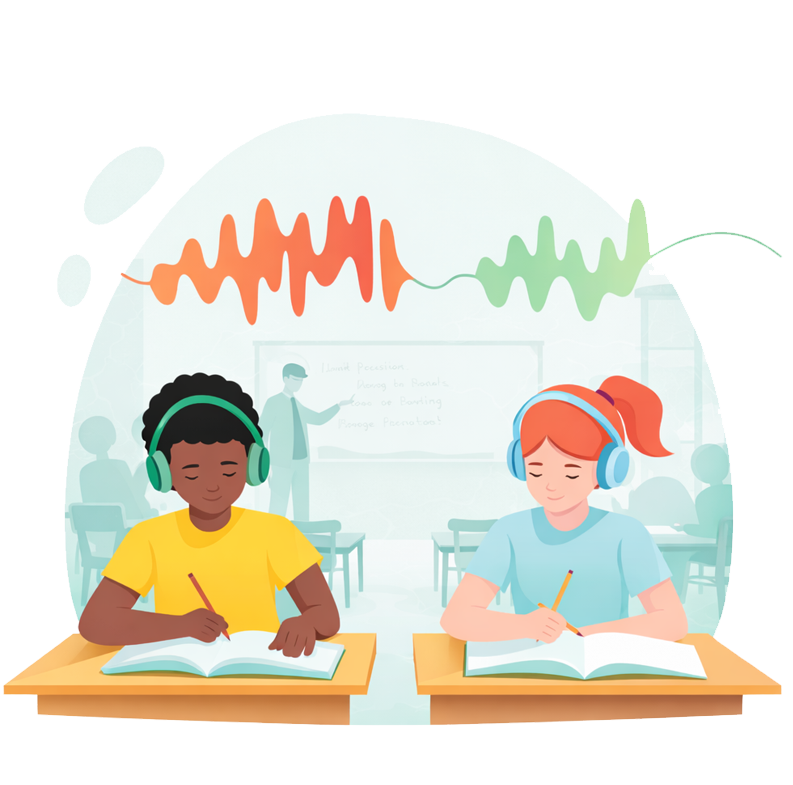
aims at investigating the relation between the quality of the indoor environment and children’s acoustic comfort and learning performance in primary schools, in order to define those acoustic conditions able to improve pupils’ acoustic comfort, thus easing their school performance.


Background and motivation

Acoustic conditions of the classrooms are among the factors most connected to the well-being of children and their academic performance (Connolly et al., 2019).
To achieve adequate levels of acoustic quality in school environments, the national legislation provides reference values to be met which do not take into account subjective aspects associated with children’s perception and their performance when they are experiencing many different stimuli simultaneously.
These requirements are obsolete and they have been determined under the hypothesis of normally-hearing pupils, without considering that background noise and long reverberation time in classrooms are often causes of auditory distress and verbal misperception for the whole pupils [8].
A revision of the indoor acoustic requirements is essential and should consider that, even though the students with hearing disabilities in Italian primary schools are about 4% of the 95,838 students with certified disabilities, however, the literature reports that about 17% of the scholastic population may experience some degree of hearing loss during the primary school age (Elbeltagy, 2020).


Project aim

The project aims at giving a contribution to the definition of the indoor environmental characteristics needed in school classrooms to guarantee pupils’ listening comfort and learning performance.


Rationale

Among the four main categories of Indoor Environmental Quality (IEQ), listening conditions are the factor most connected to children’s well-being and learning in the classroom.
Despite a large literature on the topic, the specific contribution of the acoustic component of IEQ has not been yet clearly correlated to the children’s auditory and cognitive performance, because the majority of the studies focus on real classrooms, without controlling simultaneously the environmental parameters.


Method and experimental design

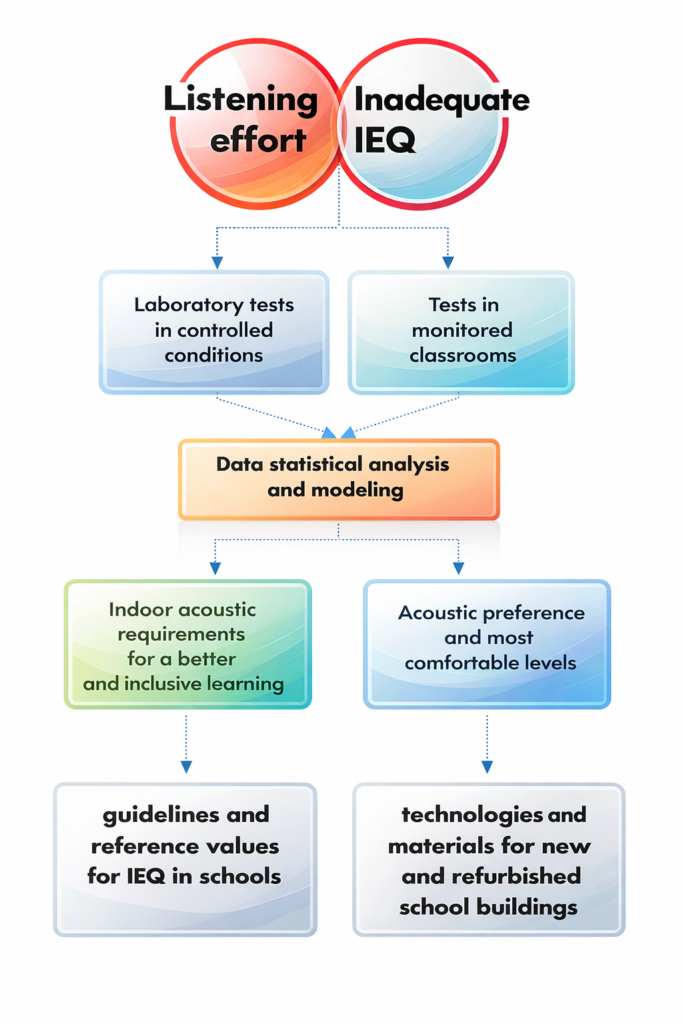
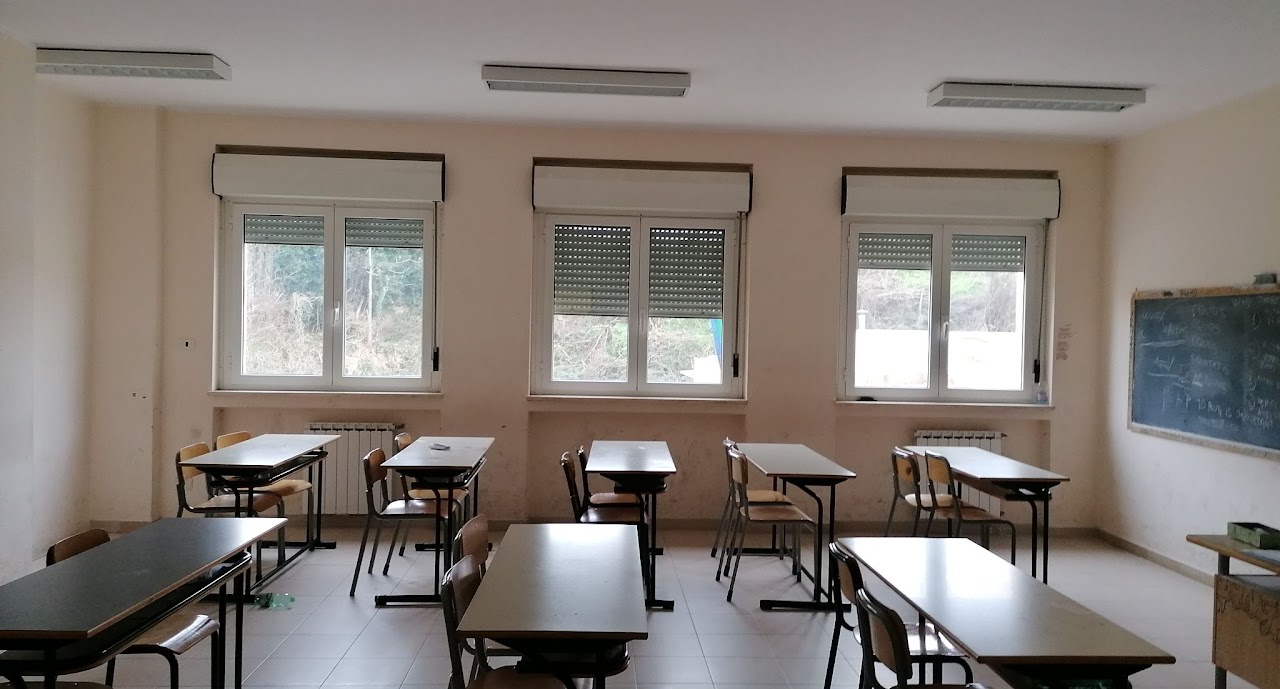
To overcome this issue, the project adopts a systematic experimental approach that consists in submitting the same tests to a sample of 80 school children, some of whom are known to be hearing-impaired, both in a controlled laboratory and in the real classroom.

We will preliminarily assess the children’s monaural auditory sensitivity.
Then we will measure overall acoustic preference, speech intelligibility and cognitive performance at first in the CORE-CARE laboratory, where all IEQ parameters are kept within the standard comfort ranges, except for ambient noise level and reverberation that are changed, and finally, we will perform the same tests in the real classroom.

The laboratory experiments allow us to analyse the acoustic parameters with no interference from the other IEQ variables (i.e. thermal, visual and air quality) since they are maintained within the standard comfort ranges.

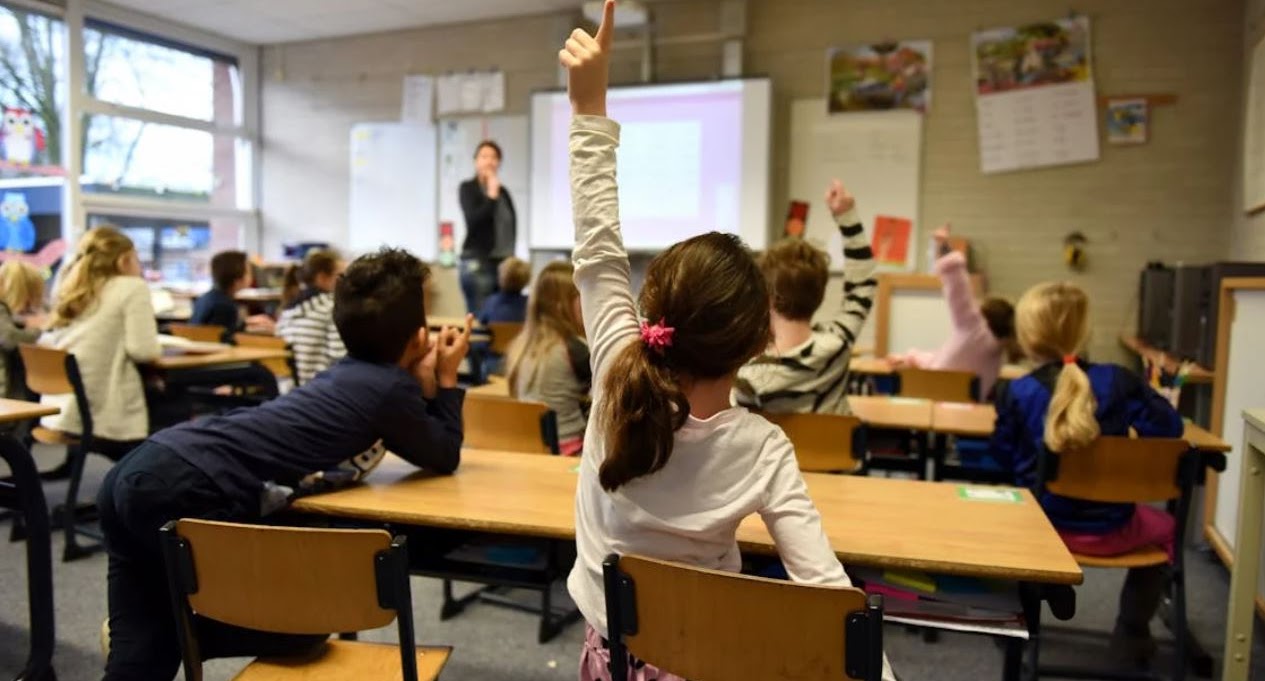
In-the-field replication of the tests allows us to quantify the contribution of the indoor air quality, the thermal and the visual environment in worsening children’s listening comfort and cognitive performance.


Expected advances

The proposed twofold approach leads the project to advance in the knowledge regarding:

a. the most comfortable signal-to-noise ratios which do not affect speech intelligibility;

b. the extent to which acoustic indoor conditions affect the speech intelligibility in noise and in comfort conditions and the children’s cognitive performance;

c. the extent to which other indoor conditions (e.g. thermal, lighting and air quality) can compromise children’s acoustic comfort and cognitive performance in real classrooms.


Monitoring and modelling

Moreover, long-term monitoring of the outdoor and indoor noise conditions in real classrooms will provide a large dataset of information we will use to calibrate a simulation model of the acoustic environment.
The model will be used to test and optimize a set of acoustic corrections through which we will obtain the most comfortable noise levels for the children.


Project structure

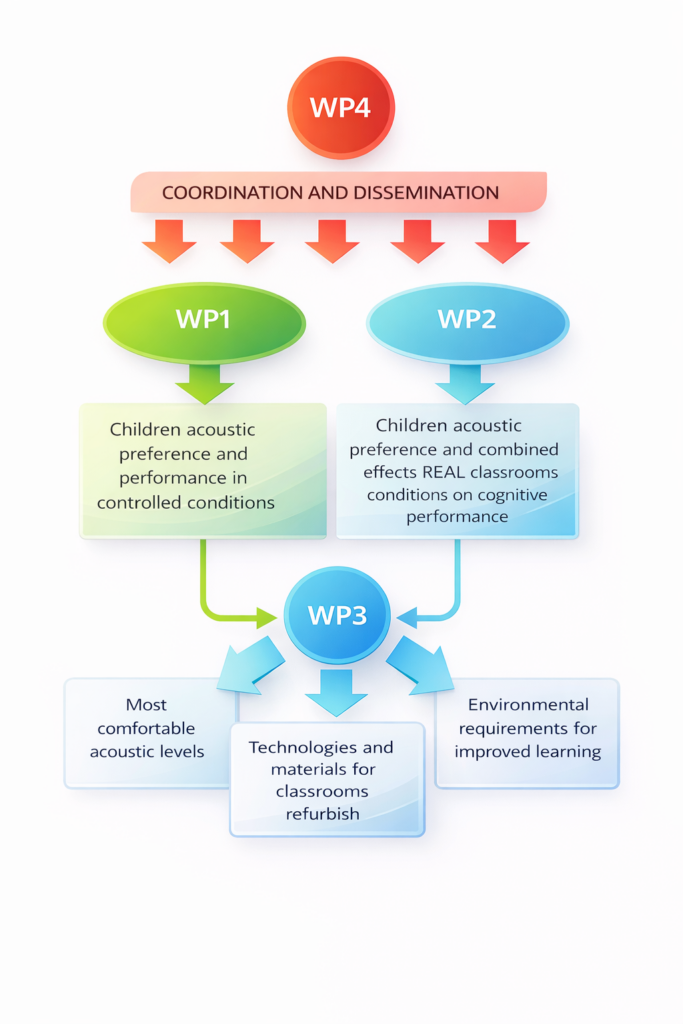
The project consists of 4 strongly interconnected Work Packages:


WP1 – Experimental study in the laboratory

The research unit RU2 gets in touch with the children and their families, develops the design of experiments to be carried out in the laboratory, controls the laboratory environmental conditions and performs tests on children.
RU1 monitors the indoor environmental conditions.
These activities are grouped into the following tasks.

1.1 Design of the experiments and laboratory setup

1.2 Audiology tests on children

1.3 Performance tests on children


WP2 – Experimental study in real classrooms

The Research Unit RU1 will manage the in-the-field experimental activities regarding the monitoring, helped by RU2 for the performance test administration.

2.1 Classroom monitoring and characterization

2.2 Questionnaire and tests administered to children


WP3 – Data statistical analysis and acoustic modeling

Both the RU1 and RU2 will elaborate on the results.

3.1 Children’s auditory characterization

3.2 Statistical analysis of the acoustic preference

3.3 Statistical analysis of the performance

3.4 Interference of other environmental conditions in real classrooms

3.5 Model calibration and simulation


WP4 – Coordination and dissemination of data

Iuav University of  Venice

Francesca Cappelletti
associate Professor of Building Physics and Energy Systems at Department of Architecture and Arts, (Principal Investigator)
 
Piercarlo Romagnoni
Full Professor of Building Physics and Energy Systems at Department of Architecture and Art
 
Ilaria Pittana
Research assistant of Building Physics and Energy Systems at Department of Architecture and Art
 
Cora Pavarin
Research assistant of Building Physics and Energy Systems at Department of Architecture and Art

University of  Padova

Pietro Scimemi
Research Associate in Clinical Audiology at the Department of Neurosciences
 
Irene Pavanello
Research Assistant in Clinical Audiology at the Department of Neurosciences
 
Antonino Di Bella
Associate Professor of Building Physics and Energy Systems, Department of Industrial Engineering

Lorem ipsum dolor sit amet

Lorem ipsum dolor sit amet, consectetur adipiscing elit, sed do eiusmod tempor incididunt ut labore et dolore magna aliqua. Ut enim ad minim veniam, quis nostrud exercitation ullamco laboris nisi ut aliquip.